

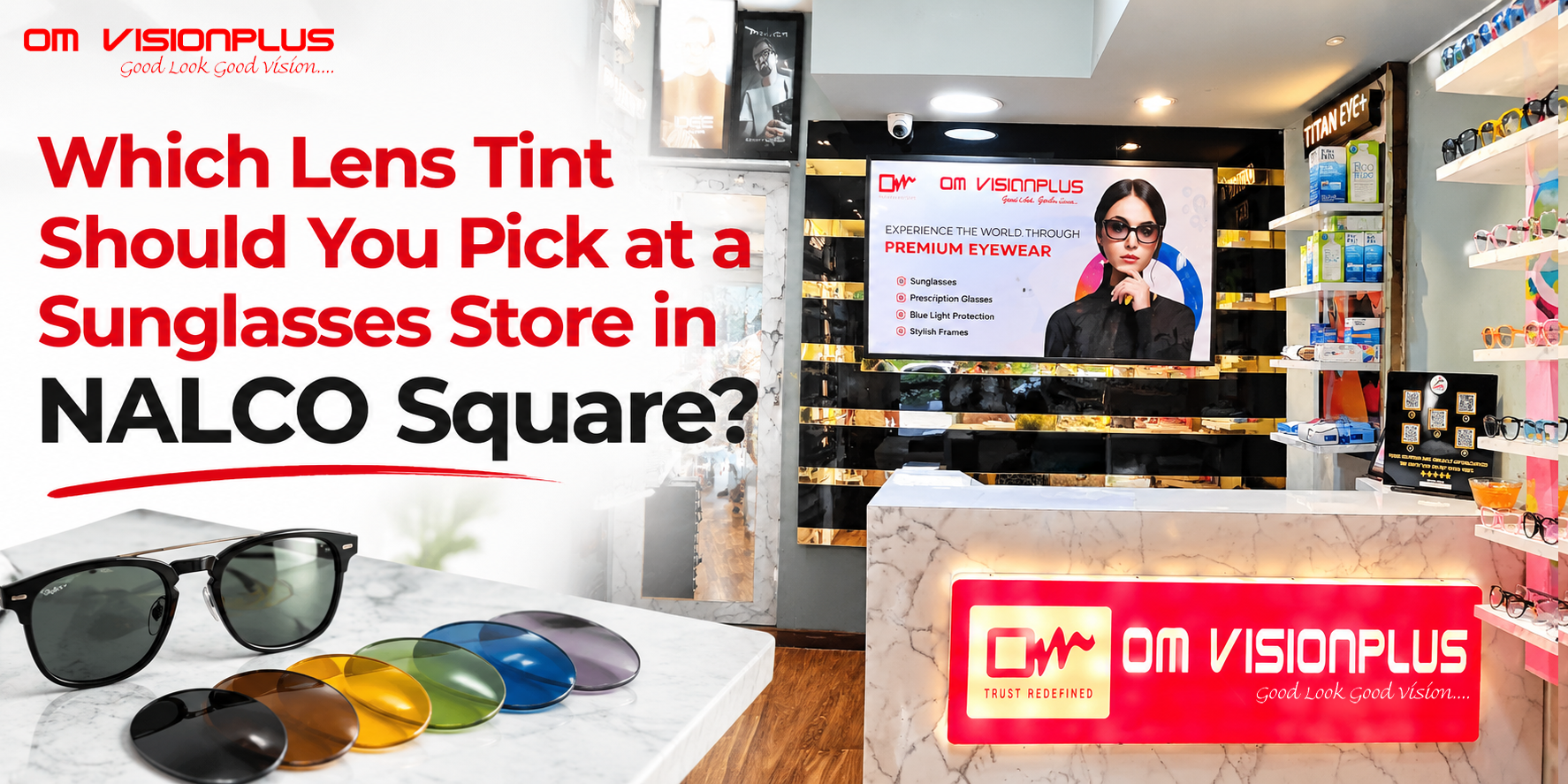
The right lens tint depends on how you use your sunglasses daily, whether that’s driving, working outdoors, or simply stepping out for errands, and not every tint suits every purpose the same way. Gray, brown, green, and yellow each change how light reaches your eyes and how sharp things look, so picking one without knowing the difference often means settling for a pair that looks good but doesn’t actually perform.
That’s exactly the kind of guidance a good sunglasses store in NALCO Square should offer before you buy. At OM Visionplus, we help you match the tint to your lifestyle instead of just handing over whatever looks trendy on the shelf.
Each tint is useful depending on how you will be using your sunglasses. For daily needs, you will need four colors.
Keep in mind that tint color has nothing to do with UV protection. Check that the lens carries 100% UV or UV400 protection before you buy, regardless of which tint you choose. As a branded sunglasses store in Bhubaneswar, we at OM Visionplus can help you find the right tint for your needs.
Gray is the one most drivers reach for, and for good reason. Colors stay accurate, so a red light still reads as red and brake lights don’t blur into the background. Brown does a decent job too, especially during golden hour, when that extra contrast makes it easier to spot a pothole before your tires do. Not sure which suits your driving? Our team at OM Visionplus can help you figure that out.
Tint isn’t the real deciding factor here, though. What actually cuts glare off wet roads, car bonnets, and glass storefronts is polarization, not the color of the lens. A plain tinted lens just lets that glare straight through. It’s one of the first things we check for anyone searching for the best sunglasses store near me and wanting glare-free driving lenses specifically.
Read On: What’s So Great About Power Sunglasses?
For most people, gray lens tint wins for everyday use, purely because it works in almost every setting without changing how colors appear. If you want a bit more personality along with function, brown is a solid everyday alternative, particularly for people who spend a good part of their day outdoors, walking, or commuting.
At OM Visionplus, we help you weigh both against how you actually spend your day. We’re the best optical shop near NALCO Square, Bhubaneswar, to turn to once you’ve settled on a tint and need the right frame to go with it.
Tint and UV protection have nothing to do with each other. A darker lens doesn’t mean better protection from the sun; that comes down to a UV coating, ideally rated 100% UV or UV400, regardless of the shade.
Many people grab the darkest pair on the rack assuming it does more for their eyes, when it might just be a look with no real protection behind it. At OM Visionplus, UV rating is one of the first things worth asking about, tint included. A few things worth checking before you settle on a pair:
Your day-to-day habits should guide this more than trends. Mostly commuting or running errands? Gray covers you well. Weekends full of hiking, fishing, or long hours outdoors? Brown or amber earns its keep with the extra contrast. There’s no single “correct” tint, just the one that matches how you actually use your sunglasses.
If you are looking for prescription glasses and eye testing near me, or a premium eyewear store near Damana Square, why not handle both in a single visit? We at OM Visionplus can help you with that.
A good pair of sunglasses shouldn’t make you choose between protecting your eyes and liking how you look; the right tint and a proper UV rating give you both. Most people only think about this after months of squinting or after noticing their eyes tire out faster than they should. Save yourself that trial and error by asking the right questions at an eyewear shop before you buy.
Contact OM Visionplus to find the tint that suits your lifestyle best. After all, the right pair isn’t just an accessory; it’s something your eyes will thank you for every single day.
Check back for our next blog, where we’ll break down whether a computerized eye check-up in Bhubaneswar actually beats the manual eye check-up.
Wearing tinted lenses indoors regularly can strain your eyes since they need to adjust to natural light levels outside.
Children can wear sunglasses too, as long as they’re properly UV rated and fitted for a smaller face.
Lenses don’t expire, but scratches and prolonged sun exposure can wear down the coating, so it’s worth getting them checked once in a while.
Have questions about eyewear or eye care? Get in touch with OM Vision Plus for expert guidance, personalised service, and clear vision.